10 rental approved upgrades that make your space feel like home
Key Takeaways
Small, reversible changes can make a rental feel more personal without leaving a permanent mark. I’d check the lease and test removable products before committing to a full room.
- Try peel-and-stick finishes for a quick change of colour or pattern.
- Choose removable kitchen and bathroom updates, and keep the original fittings safe.
- Use plug-in lighting, window treatments and smart bulbs to adjust the mood without rewiring.
- Add rugs and freestanding shelves for comfort and storage that can move with you.
- Check the product instructions and your rental terms before installing anything.
1. Swap in peel-and-stick wallpaper
A plain wall can make a room feel unfinished, but wallpaper can bring in colour and pattern without the commitment of paint. I’d start with a small area, such as the wall behind a desk or a nook that needs a little definition. The aim is a change that feels like yours and can be reconsidered when you move.
Before buying a roll, I’d look closely at the wall surface and the wallpaper’s removal instructions. Some products may not suit every paint finish, and an inconspicuous test patch gives you a chance to see how the adhesive behaves. Check the lease as well, since removable does not always mean permitted.
A restrained pattern can add interest without making a small room feel busy, while a softer colour can help tie together furnishings you already own. I’d keep any offcuts and note the product details, so it’s easier to patch or remove the wallpaper consistently later. Done thoughtfully, this is one of the more personal rental approved upgrades, without requiring a permanent change.
2. Add removable backsplash tiles
A kitchen backsplash is a small area that can have an outsized effect on how finished the room feels. Removable tile sheets or panels offer a way to introduce colour or texture without taking on a full renovation. I’d treat them as a surface covering, not a substitute for the protection or maintenance a fixed backsplash may provide.
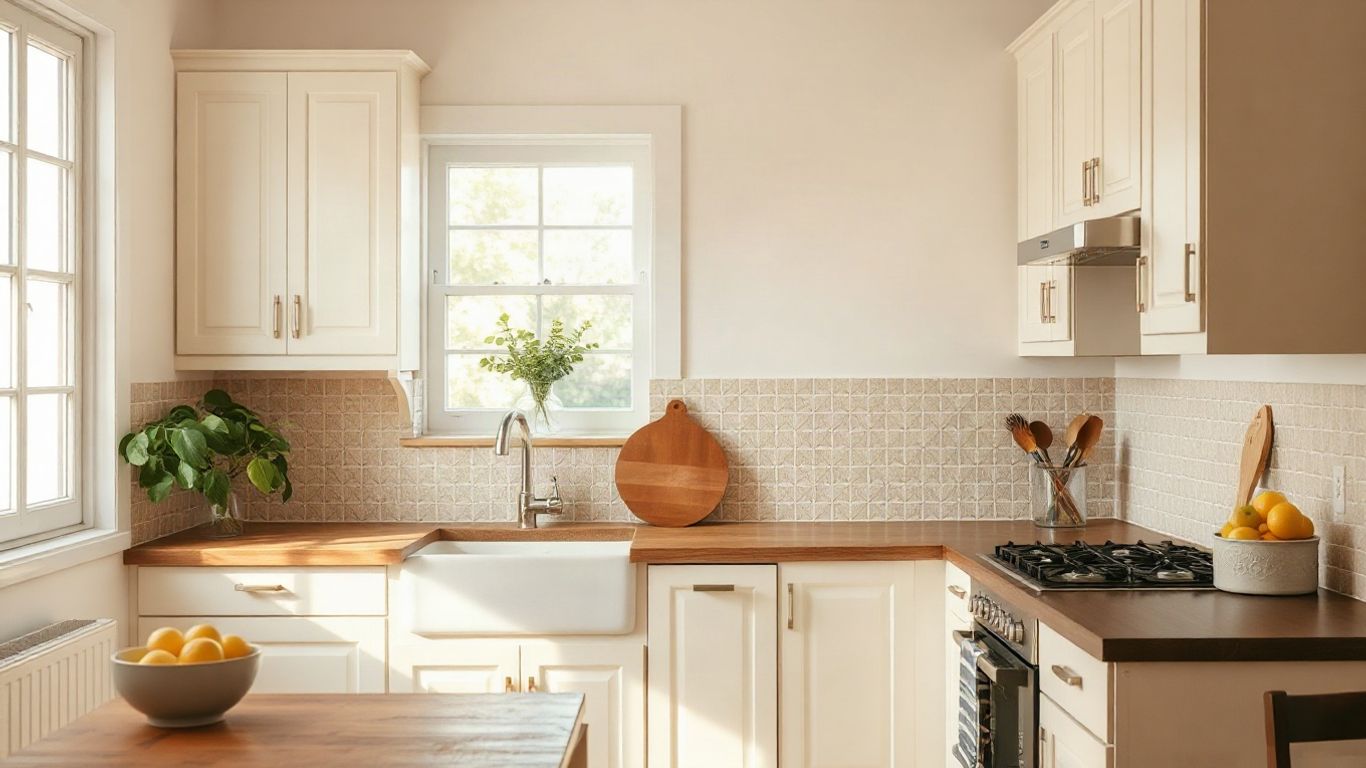
The fit matters: measure carefully around outlets, corners and the edges of cupboards, and follow the maker’s instructions for surface preparation. I’d test a discreet section first and avoid applying anything over a damaged or damp surface. If the product needs a particular cleaning method, make sure that routine suits how you use the kitchen.
A simple pattern tends to sit comfortably alongside existing counters and cabinets, especially when the rest of the room already has strong finishes. Keep the original surface visible at the edges where practical, and retain the packaging or installation notes for removal day. If the finish does not release as expected in a test area, I’d stop rather than risk pulling at the surface beneath it.
3. Upgrade cabinet hardware
Changing cabinet knobs or pulls can make an older kitchen or bathroom feel more considered. I’d first check whether the existing hardware is screwed in and measure the distance between screw holes, because matching that spacing can make a swap much simpler. The right shape and finish can quietly connect otherwise mismatched details in a room.
Keep every original knob, pull and screw together in a labelled bag. That small habit makes it easier to put the room back the way it was, and it prevents the original pieces from getting mixed up with new hardware. I’d also avoid forcing a screw that seems stuck or using a replacement that does not fit properly.
When choosing a style, I like to consider how it feels in the hand as well as how it looks. A comfortable pull can make everyday cupboards easier to use, while a consistent finish helps the change look intentional. It’s a modest project, but keeping the original hardware safe is what makes the update easier to reverse.
4. Install plug-in lighting
A rental’s overhead light may not be the most inviting source of illumination, and adding another layer can change the mood of a room. Plug-in lamps and wall lights offer flexibility without the need to alter wiring. I’d think about where I read, work or unwind, then add light close to those activities.
Cord placement is worth planning before you plug anything in. Keep cables away from walkways and arrange them neatly along a wall where possible; avoid pinching them behind furniture or stretching them across a busy route. The lamp’s location should feel natural in the room, rather than forcing the furniture into an awkward arrangement.
A floor lamp beside a chair, a table lamp on a sideboard or a plug-in light near a desk can each fill a different role. I’d choose a shade and bulb that suit the existing decor, then check that the outlet is easy to reach. Because the fixtures remain portable, they can come along to the next home instead of becoming part of the rental.
5. Hang curtains with no-drill brackets
Curtains soften a room and can make a window feel more finished, but drilling may not be an option in a rental. No-drill brackets designed for a particular window or frame can be a useful alternative, provided they are compatible with the window and installed as directed. I’d measure the frame and curtain before buying anything.
The weight of the fabric matters, so check the bracket’s stated limits and avoid assuming that every style of curtain will work. I’d also make sure the brackets do not interfere with opening or closing the window. A test fit can catch an awkward placement before the whole treatment is hung.
For a lighter, airy feel, sheer panels can soften daylight; a heavier fabric may make the room feel cosier. Either way, the length and width affect the finished look, so I’d take measurements twice. When it’s time to remove the brackets, follow the product instructions and check the frame for any marks.
6. Use temporary window film
Temporary window film can add a little privacy while still allowing daylight into a room. It may be particularly useful on a window that faces a neighbouring building or a shared area. I’d check the film’s description carefully, since different products provide different levels of privacy and light transmission.
Before applying it, clean and dry the glass as directed and test a small area if the manufacturer recommends doing so. Measure each pane rather than assuming the windows are identical, then trim with care. I’d avoid covering hardware or applying film to any surface the product instructions say is unsuitable.
The effect depends on the film’s finish and the light outside, so I’d look at a sample at different times of day if possible. A frosted appearance can be subtle, while a patterned one adds more visual character. As with any temporary finish, keep removal instructions handy and take it down gently when the time comes.
7. Add smart bulbs and plug-in switches
Smart bulbs can give an existing lamp or fitting more flexibility without replacing the fixture itself. I’d check the bulb type and compatibility with the lamp before buying, then consider the kind of control I actually want. The simplest setup is often the one that fits naturally into an ordinary routine.
A plug-in switch can also make a compatible lamp easier to control, depending on the product. Before choosing one, I’d read the instructions and confirm that the lamp and outlet are suitable. Here’s the short checklist I use to keep the setup straightforward:
- Check the bulb base and fitting before purchasing.
- Confirm the product works with the lamp or plug it will control.
- Follow the setup and safety instructions provided with the product.
- Keep the original bulb or switch if you replace anything temporarily.
Once everything is connected, I’d try the controls from the spot where I usually use the lamp. If the setup feels fiddly, a basic bulb and ordinary switch may suit the room better. The point is to make the lighting convenient, not to add technology for its own sake.
8. Refresh floors with area rugs
An area rug can make a room feel warmer and help define a seating or dining area without changing the floor itself. I’d choose its size based on the furniture arrangement, rather than picking a small rug that floats awkwardly in the middle of the room. Even a simple, neutral rug can make existing pieces feel more connected.
Think about the surface underneath and whether the rug needs a non-slip pad. Check that the pad is suitable for the floor finish, and make sure the rug lies flat so its edges do not become a trip point. A little preparation helps the rug sit well and keeps everyday use comfortable.
Colour and texture can bring in a new note without asking you to repaint or replace flooring. I like to repeat one shade from a cushion, artwork or throw so the rug feels at home in the room. Since it can move with you, it’s a practical way to make a temporary space feel more settled.
9. Create storage with freestanding shelves
Freestanding shelves can add storage without attaching anything to the walls. They’re useful in a room where cupboards are limited, and they can also give books, plants or everyday objects a place to live. I’d measure both the space and the shelf unit before bringing one home.
A shelf should sit securely on a level surface, with heavier items kept low where possible. I’d follow the assembly directions and pay attention to any stability guidance supplied with the unit. If the manufacturer recommends securing it to a wall, check the rental terms and ask before making any alteration.
Open shelving can look calm when it holds a mix of useful and personal things, rather than every spare item in the house. Baskets help gather smaller belongings, while leaving some room around objects keeps the unit from feeling crowded. Because the shelf is freestanding, it can be rearranged as your needs or room layout change.
10. Replace the showerhead with a removable model
A different showerhead can be a simple way to make a bathroom feel more comfortable, as long as the existing connection and rental terms allow a temporary swap. I’d check the product details and installation instructions before taking anything apart. If the fitting looks unusual or the instructions do not match what is there, it’s better to pause than to force it.
Keep the original showerhead and any washers or small parts together in a safe place. Follow the instructions for the new model, and check for leaks after installation. I’d avoid overtightening a connection or using a tool in a way the manufacturer does not recommend.
When moving out, reinstall the original fitting if the arrangement permits and return it in good condition. A removable model can make the daily routine feel a little more personal, but a careful, reversible approach matters more than the upgrade itself. That same principle applies to every change in a rental: make it thoughtfully, and leave the space ready for its next chapter.
Conclusion
A rental can feel more like home through small choices that suit your taste and your daily routines. I’d start with one change, check that it can be reversed, and keep the original pieces safe; a handful of thoughtful updates can make a temporary space feel distinctly yours.