Rental approved upgrades: 25 renter-friendly ways to improve your home
Key Takeaways
A rental can feel personal without permanent changes. I focus on updates that are easy to remove, simple to explain to a landlord, and unlikely to leave a mark behind.
- Check the lease and ask for written approval before making permanent changes.
- Prioritise removable wallpaper, hooks, rugs, lighting, and freestanding storage.
- Keep original fittings safely stored when swapping hardware.
- Photograph the property before and after each approved change.
- Remove temporary upgrades carefully before moving out.
Start with upgrades your landlord is likely to approve
The safest rental approved upgrades are reversible, tidy, and low-risk. I usually begin with changes that do not alter the structure or require new wiring, plumbing, or permanent fixings. That approach makes the conversation with a landlord much easier.
What makes an upgrade rental-friendly
A rental-friendly upgrade can usually be removed without specialist work or visible damage. Think of a rug rather than fitted flooring, a freestanding shelf rather than a built-in cabinet, or a plug-in lamp rather than rewiring. Reversibility matters most because it keeps the property close to its original condition.
I also consider whether the change could affect safety, moisture, ventilation, or access. Anything that touches those areas deserves more care than a purely decorative addition.
Removable, reversible, and low-risk changes
I look for products designed to lift away, stand independently, or attach without drilling. Adhesive hooks, tension rods, removable films, and furniture that can move with me are useful starting points.
Before buying, I check the surface, weight limit, and removal instructions. A product described as removable is not automatically suitable for every painted wall, tile, or finish.
Upgrades that usually need written permission
Changes involving paint, permanent wallpaper, new fixtures, plumbing, electrical work, air-conditioning installation, or alterations to doors and cabinetry usually deserve written approval. The same is true for anything that might remain when I leave.
Even a small change can become complicated if it affects another room, a shared area, or the building’s exterior. I keep the request specific rather than assuming a landlord will approve a broad makeover.
How to check your lease before making changes
I read the parts of the lease covering alterations, fixtures, fixtures removal, attachments, pets, balconies, and maintenance. I also check whether the property manager has a separate approval process or preferred tradesperson.
A quick checklist helps me avoid missing a detail:
- Identify whether the change is cosmetic, structural, electrical, or plumbing-related.
- Check whether the lease requires written consent.
- Ask who pays for installation, maintenance, and removal.
- Confirm whether the original fitting must be kept and replaced later.
Once I have those answers, I can choose an upgrade with a clearer idea of the work and responsibility involved. If the lease is unclear, I ask the property manager before starting rather than relying on an assumption.
Improve your rental without changing the walls
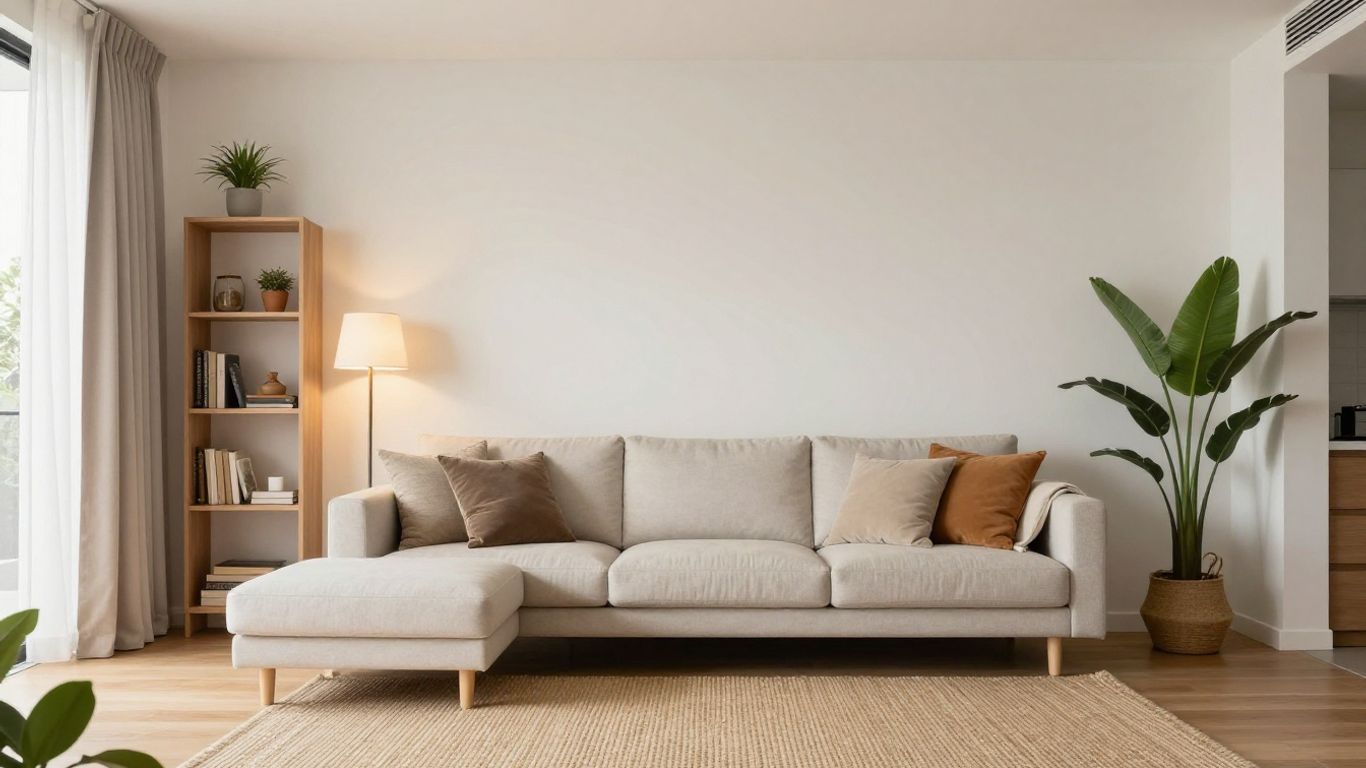
Walls often make a room feel unfinished, but they do not need paint or permanent shelving to look considered. I use colour, texture, and height to create interest while keeping the underlying surface intact. These small changes can make a plain rental feel far more settled.
Peel-and-stick wallpaper and backsplash
Peel-and-stick wallpaper can add colour to a small feature area, while removable backsplash panels can make a kitchen feel more finished. I test a sample in an inconspicuous spot first, since paint and wall finishes vary.
I avoid placing adhesive material over damp, flaking, dusty, or freshly painted surfaces. Careful measuring also helps prevent awkward seams and reduces waste when it is time to remove the covering.
Removable hooks, shelves, and storage
Adhesive hooks are useful for light artwork, keys, towels, and small accessories when the product is suitable for the surface and load. For heavier items, I prefer a freestanding shelf, leaning rack, or narrow console so the wall carries no weight.
I keep the packaging and note the weight limits. That simple habit stops me from treating a light-duty hook as a substitute for a proper fixing.
Temporary flooring and area rugs
An area rug can define a living zone, soften a bedroom, and disguise a floor I do not love without changing it. I choose a size that leaves enough visible flooring around the edges and add a suitable non-slip underlay where needed.
For a larger temporary floor covering, I check that doors still open, vents remain clear, and moisture cannot become trapped underneath. I lift and clean the area occasionally rather than leaving it forgotten.
Better window treatments without drilling
Curtains on tension rods, clip-on shades, and removable window film can improve privacy and light control without drilling into frames. I measure carefully, especially if the window opens inwards or has a handle in an awkward position.
Lighter fabrics can keep a room airy, while lined curtains make a space feel more finished. I make sure the treatment does not block required ventilation or create a tangle near a heater.
Make the kitchen more functional
A rental kitchen can become frustrating when storage is limited or the lighting is harsh. I improve it in layers, starting with the fittings and surfaces I use every day. The best changes make cooking easier without pretending the room is permanently mine.
Swapping cabinet hardware
Replacing knobs or handles is a quick way to alter the character of a kitchen. I remove one original piece first, check the hole spacing, and store every screw and fitting in a labelled bag.
I choose replacements with matching dimensions so I am not drilling new holes. Before moving out, I can reinstall the originals without leaving extra marks.
Adding renter-friendly lighting
Plug-in lamps, rechargeable lights, and under-cabinet lights can brighten a work surface without altering the electrical system. I use warm light where I want a softer feel and a clearer light near food preparation areas.
Cords need to stay away from sinks, hot surfaces, walkways, and closing drawers. I also avoid covering vents or placing lights where heat could build up.
Improving countertop storage
A narrow tray, tiered stand, or rolling trolley can gather oils, tea supplies, or everyday utensils without crowding the bench. I reserve the most accessible space for items I use often and move occasional appliances elsewhere.
The aim is not to fill every surface. A little clear bench space makes the kitchen feel calmer and gives me room to prepare food.
Installing removable organizers and fixtures
Over-door racks, shelf risers, drawer dividers, and tension shelves can create useful zones inside cupboards. Removable sink caddies and rail-mounted accessories can also help, provided they fit securely and do not scratch the finish.
I check clearances before installing anything. Cupboard doors should close properly, drawers should glide freely, and heavy items should not sit where they could fall.
Upgrade the bathroom on a budget
Bathrooms benefit from practical changes more than elaborate decoration. I focus on water flow, light, storage, and textiles while keeping an eye on moisture. Anything connected to plumbing or electrical fittings deserves extra caution and, where required, approval.
Replacing the showerhead
A replacement showerhead can change the feel of a bathroom, but I treat it as a plumbing-related alteration rather than an automatic improvement. I check the lease, ask for approval if needed, and keep the original fitting in a safe place.
When fitting any shower accessory, I follow the manufacturer’s instructions and watch for leaks. A small drip can cause a much bigger problem if it goes unnoticed.
Adding better lighting and mirrors
A plug-in lamp outside splash zones or a rechargeable mirror light can make the bathroom easier to use without changing the wiring. I choose a mirror that leans securely or hangs from an approved removable fixture.
I keep electrical items well away from water and avoid covering existing vents or lights. Better positioning often helps as much as buying something new.
Using storage that does not require drilling
A slim trolley, freestanding cabinet, over-door organiser, or tension shelf can hold toiletries without adding holes. I use trays inside cupboards to keep small bottles together and make cleaning simpler.
I leave room around taps, drains, and ventilation points. In a damp room, easy-to-lift storage is preferable because I can clean underneath it regularly.
Refreshing the space with textiles and accessories
A new bath mat, shower curtain, towels, and a small washable basket can change the room’s mood quickly. I repeat one or two colours rather than introducing a collection of unrelated patterns.
I choose fabrics that dry easily and wash them regularly. Simple accessories can make the bathroom feel warmer without adding clutter to a small space.
Add comfort and smart-home features
Comfort upgrades do not need to involve permanent technology. I prefer portable or plug-in options that can move with me and be removed without leaving equipment behind. I still check the rental’s rules, power points, ventilation, and safety requirements before using them.
Smart bulbs and plug-in lighting
Smart bulbs can adjust the light from a compatible app or control, while plug-in lamps give me flexibility without rewiring. I check the bulb type and fitting before buying, then keep the original bulb if I replace it.
A simple lamp timer can also make a room feel welcoming when I arrive home. I avoid overloading power boards and keep cables tidy around walkways.
Energy-efficient window coverings
Insulated curtains, close-fitting blinds, and removable window film can help manage glare and indoor comfort. I select a treatment that suits the window and does not interfere with locks, handles, or required airflow.
I take measurements twice and consider the room’s orientation before choosing a colour or thickness. A well-fitted covering can also make the space feel quieter and more private.
Portable air conditioners and fans
Fans are straightforward portable options for moving air, especially when positioned where they will not obstruct a doorway. A portable air conditioner needs more planning because its exhaust, drainage, power use, and window fitting all matter.
I check the lease and building rules before using one. I also make sure the window kit sits securely and that condensation is managed according to the manufacturer’s instructions.
Smart thermostats and leak detectors
A smart thermostat may not suit a rental if the existing heating or cooling system is shared, hard-wired, or controlled by the building. I do not remove or alter a fixed controller without written approval and appropriate installation.
A small leak detector can be placed near a washing machine, sink, or hot-water connection without changing the plumbing. I treat it as an alert device, not a replacement for reporting a leak promptly.
Improve style, storage, and everyday convenience
Some of the most useful rental improvements are not attached to the property at all. Furniture, textiles, art, and portable dividers can reshape how I use a room without changing its bones. This is where I can bring in personality with very little risk.
Freestanding furniture that adds storage
A bookcase, sideboard, storage bench, or narrow wardrobe can solve a practical problem while adding visual structure. I measure the wall, doorway, and turning space before buying, particularly in older or compact buildings.
I secure tall furniture appropriately where necessary and avoid blocking windows, vents, exits, or access panels. Furniture that works hard earns its floor space.
Temporary room dividers
Open-plan rentals can feel more comfortable with a folding screen, open bookcase, curtain on a tension rod, or strategically placed plant stand. I use these to suggest separate zones rather than building a wall.
I keep the divider stable and preserve a clear path through the room. A little separation can create a work corner or reading spot without making the space feel closed in.
Artwork and decorative accents
Artwork, framed prints, mirrors, cushions, and ceramics can give a rental a distinct point of view. I use removable hanging products for suitable weights and place larger pieces on shelves or furniture when I want to avoid the wall altogether.
I group objects by colour, height, or material so the arrangement feels intentional. Leaving some empty space stops decoration from becoming visual noise.
Balcony and patio improvements
Outdoor rugs, portable seating, planters, solar lanterns, and a small side table can turn a balcony or patio into another usable area. I check body-corporate or building rules before adding anything visible from outside.
I choose weather-suitable materials and make sure nothing can fall, blow away, or obstruct drainage. Plants should sit in trays that protect the surface from standing water.
Get approval and protect your security deposit
A clear paper trail makes approved changes easier to manage. I keep requests brief, describe the exact item, and explain how I will install, maintain, and remove it. That record protects my understanding of what was agreed without turning a simple update into a drawn-out exchange.
How to write a clear upgrade request
I describe the current issue, the proposed change, the product or method, and the expected timing. I also say whether I will pay for the item and whether I will restore the original fitting when I leave.
Specific wording is more useful than saying I want to renovate. If possible, I attach a product link, photo, dimensions, and removal instructions so the request can be considered on its actual details.
What to include in landlord approval
Written approval should identify the room, the exact upgrade, who will install it, and who is responsible for damage or removal. I ask whether the original fixture must be stored and whether the property must be restored at the end of the tenancy.
I keep the approval with the lease documents and avoid relying on a casual verbal conversation. If the approved product becomes unavailable, I ask again before substituting another one.
Taking before-and-after photos
I photograph the area before installing anything, including close-ups of existing marks, fittings, paint, tiles, and flooring. I take another set after the work is complete and keep the files dated.
The photos are useful for remembering where original parts belong and for checking the condition when I move out. I also save receipts, instructions, and approval messages in one folder.
Removing upgrades when you move out
I remove temporary fittings slowly, follow the product instructions, and clean the area with a method suitable for the surface. I reinstall original hardware, return stored items to their places, and check the room in daylight.
I do not wait until the final hour. Giving myself time to repair a small issue or ask a question makes the handover much less stressful.
Conclusion
I can make a rental feel comfortable and personal without treating it like a permanent renovation project. By choosing reversible changes, checking the lease, requesting approval where needed, and keeping careful records, I create a home that suits my life while respecting the property I am renting.